Immersed pump
$137.80 tax excl.
Delivery 3 to 5 days
$919.91 tax excl.
Delivery 2 to 3 days
$942.25 tax excl.
Delivery 2 to 3 days
$1,002.77 tax excl.
Delivery 2 to 3 days
Practical information
Need advice? Our team is available (Monday - Friday: 8:30-12:00 and 13:00-16:30).
- Telephone: 03 44 25 91 01
- Email: contact@pompes-h2o.com
- Public bodies: payment by administrative order, invoicing via Chorus Pro
- Payment: secure payment by bank card or bank transfer
Delivery
- Same-day dispatch for orders placed before 12 noon, in most cases.
- Colissimo without signature in mainland France, delivery within 2 to 3 days.
- Chronopost on request.
- DB SCHENKER transport for oversized parcels: delivery to your freight forwarder in France, with guaranteed tracking.
A submersible pump for a borehole, well or tank
A submersible pump works under water and pushes it to the surface. It suits boreholes, deep wells, tanks and rainwater reserves, where a surface pump can no longer draw water.
Selection criteria: diameter, depth and flow
- Inner diameter of the borehole or well: the pump must fit with some clearance.
- Depth of the water while pumping and discharge height: they set the head to cover.
- Flow rate the borehole can supply without running dry, and the flow your use needs.
Power supply and pump protection
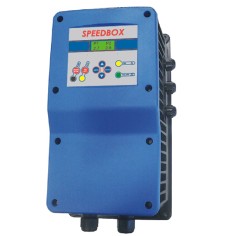
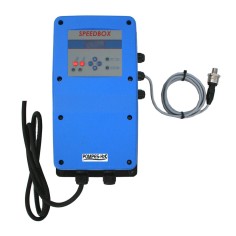
Depending on the model, the pump runs on single-phase or three-phase power. Plan a suitable control box and protection against dry running (probe or level controller) to avoid running the pump dry.
Which sub-category should you choose?
3" borehole pumps, 4" and 6" for a cased borehole; well pumps for wells, cisterns and water reserves; solar pumps; borehole pump kits; submersible motors, control boxes and borehole and well accessories. Guides: Choosing a submersible borehole pump and Calculating total dynamic head.
Frequently asked questions: Submersible pumps
Submersible or surface pump: how to choose?
A surface pump draws the water: it is limited by the suction height, only a few metres. Beyond that, or for a borehole or a deep well, choose a submersible pump, which pushes the water up from the bottom.
How do I choose a borehole pump?
Note the inner diameter of the borehole, the depth of the water while pumping and the flow the borehole can supply. The head to plan for adds the immersion depth, the discharge height and the friction losses.
Does a borehole have to be declared?
In France, a borehole or well for domestic use must be declared at the town hall. Ask the town hall for the form and the procedure.
What electrical equipment is needed?
Depending on the model, the submersible pump needs a control box or a capacitor, and protection against lack of water. The product page states the power supply (single-phase or three-phase) and the accessories required.
Can a borehole pump handle sand?
Borehole pumps are designed for clear water. Sand and particles wear the impellers and the motor quickly: if your borehole produces sand, choose a model suited to loaded water or have the borehole checked.
What is the difference between a borehole pump and a well pump?
A borehole pump is narrow (3, 4 or 6 inches) to fit in a cased borehole. A well pump is meant for wells, cisterns and water reserves, often of larger diameter. Always check the inner diameter of your structure and the depth of the water.
Do you need advice before buying?
Our team helps you choose the right equipment for your installation: call +33 3 44 25 91 01 Monday to Friday, 8:30 am to 12:00 pm and 1:00 pm to 4:30 pm (French time), or email contact@pompes-h2o.com. Public bodies can pay by administrative order (mandat administratif), with invoicing through Chorus Pro.